
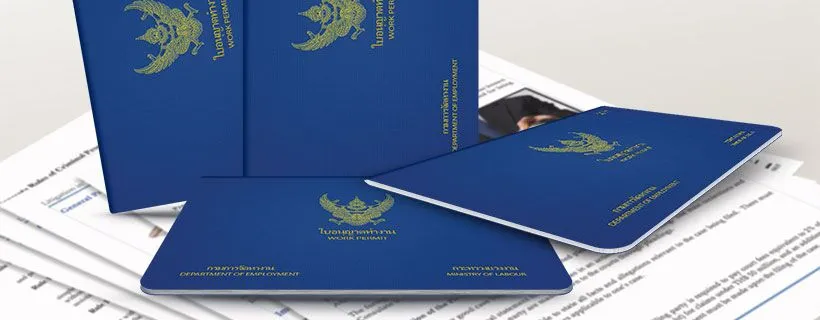
Thai Work Permit
Thailand remains one of Southeast Asia’s most attractive destinations for international professionals, entrepreneurs, and skilled workers. With its dynamic economy, expanding tourism sector, and growing technology and manufacturing industries, the country continues to attract foreign talent seeking employment opportunities. However, foreigners who wish to work in Thailand must comply with specific legal requirements, the most important of which is obtaining a Thai work permit.
A work permit is an official document issued by the Thai government that authorizes a foreign national to legally engage in employment within the country. Without this permit, foreigners are generally prohibited from performing any form of work in Thailand, regardless of whether the activity is paid or unpaid.
The legal framework governing work permits is primarily established by the Foreigners’ Working Management Emergency Decree B.E. 2560, which regulates employment conditions, work permit issuance, and the obligations of both employers and foreign employees.
This article provides a comprehensive overview of Thai work permits, including the legal framework, eligibility requirements, application procedures, employer responsibilities, and compliance obligations for foreign workers in Thailand.
Legal Framework Governing Work Permits
Foreign employment in Thailand is regulated primarily under the Foreigners’ Working Management Emergency Decree B.E. 2560. This legislation replaced earlier employment regulations and introduced a modernized system for managing foreign labor.
The decree defines “work” broadly to include any activity that involves physical or mental effort for the purpose of producing goods, providing services, or generating economic value. As a result, even voluntary work or consulting activities may require a work permit.
Work permits are administered by the Department of Employment Thailand, which operates under the Ministry of Labour. The department is responsible for reviewing applications, issuing permits, and ensuring that foreign workers comply with Thai labor laws.
Who Needs a Thai Work Permit?
In general, all foreign nationals who intend to work in Thailand must obtain a work permit before beginning employment.
This requirement applies to individuals engaged in various forms of work, including:
-
Employment with Thai companies
-
Work for foreign-owned businesses operating in Thailand
-
Teaching or educational services
-
Consulting or advisory roles
-
Participation in business operations
Working without a valid permit can lead to serious legal consequences, including fines, imprisonment, and possible deportation.
Relationship Between Work Permits and Visas
A Thai work permit is typically issued in conjunction with a valid visa that permits employment.
Foreign workers most commonly enter Thailand with a Non-Immigrant B Visa Thailand, often referred to as a business visa. This visa allows foreigners to legally enter the country for business or employment purposes.
Once the individual arrives in Thailand with a Non-Immigrant B visa, the employer can proceed with the work permit application through the Department of Employment Thailand.
In many cases, obtaining a work permit is a prerequisite for extending the foreign employee’s visa and maintaining legal employment status.
Eligibility Requirements for a Thai Work Permit
To qualify for a work permit in Thailand, both the foreign employee and the employer must satisfy certain legal requirements.
Qualifications of the Foreign Employee
Foreign workers must generally meet the following criteria:
-
Possess a valid Non-Immigrant visa
-
Have relevant education or professional experience related to the position
-
Not be engaged in occupations restricted to Thai nationals
Certain professions are reserved exclusively for Thai citizens, including jobs related to agriculture, retail trading, and manual labor.
Employer Requirements
Employers must also meet several conditions in order to hire foreign workers.
These conditions may include:
-
Maintaining a minimum registered capital requirement
-
Employing a certain number of Thai workers
-
Demonstrating that the foreign employee provides skills not readily available in the local workforce
These regulations aim to ensure that the employment of foreign workers benefits the Thai economy while protecting opportunities for local workers.
Work Permit Application Process
The process of obtaining a work permit generally involves several steps.
Document Preparation
Both the employer and the foreign employee must prepare a set of documents required for the application.
Typical documents include:
-
Passport copies
-
Educational certificates
-
Employment contract
-
Company registration documents
-
Financial statements of the employer
These documents must be submitted to the Department of Employment Thailand for review.
Application Submission
The employer usually submits the work permit application on behalf of the foreign employee.
Once submitted, government officials review the documentation to ensure that both the applicant and the employer meet legal requirements.
Work Permit Issuance
If the application is approved, the Department of Employment Thailand issues a work permit booklet that specifies:
-
The employee’s job position
-
The employer’s name
-
The place of employment
-
The permitted scope of work
Foreign employees are only allowed to work within the conditions stated in the permit.
Obligations of Work Permit Holders
Foreign workers who receive a work permit must comply with several legal obligations.
These include:
-
Performing only the job specified in the permit
-
Working only for the employer listed in the permit
-
Carrying the work permit while working
-
Updating the permit if job duties or employment location changes
Failure to comply with these conditions may result in penalties or revocation of the work permit.
Employer Responsibilities
Employers who hire foreign workers also have specific legal responsibilities under Thai law.
These responsibilities may include:
-
Ensuring that the employee has a valid work permit
-
Reporting employment details to authorities
-
Maintaining accurate employment records
-
Notifying authorities if the employee’s employment ends
Employers who violate these requirements may face fines or legal sanctions.
Work Permit Renewal and Extension
Thai work permits are typically issued for a limited period that corresponds with the foreign employee’s visa validity.
Before the permit expires, the employer may apply for a renewal.
Renewal applications generally require updated documentation demonstrating that the employee continues to meet eligibility requirements and that the company remains compliant with Thai regulations.
Alternative Work Authorization Programs
Thailand has introduced specialized visa and work authorization programs for certain categories of professionals.
One notable example is the Thailand Smart Visa, which allows highly skilled professionals, investors, and startup entrepreneurs to work in Thailand without requiring a traditional work permit.
These programs are designed to attract talent in technology, innovation, and other strategic industries.
Penalties for Working Without a Permit
Working in Thailand without a valid work permit is considered a serious offense under the Foreigners’ Working Management Emergency Decree B.E. 2560.
Penalties may include:
-
Fines imposed on the foreign worker
-
Fines imposed on the employer
-
Possible deportation of the foreign national
-
Restrictions on future entry into Thailand
Strict enforcement of these rules reflects the government’s efforts to regulate foreign employment and maintain labor market integrity.
Conclusion
A Thai work permit is a critical legal requirement for foreigners seeking employment in Thailand. Governed by the Foreigners’ Working Management Emergency Decree, the work permit system ensures that foreign employment is properly regulated while supporting the country’s economic development.
Foreign workers must obtain a valid visa, meet professional qualifications, and secure sponsorship from a qualified employer before applying for a work permit through the Department of Employment. Once issued, the permit clearly defines the scope of permitted employment and must be strictly followed.
For businesses and professionals alike, understanding the legal requirements surrounding work permits is essential for maintaining compliance and avoiding legal complications. With proper preparation and adherence to Thai labor regulations, foreign professionals can successfully pursue employment opportunities and contribute to Thailand’s growing economy.